
John Irving is one of America’s most gifted novelists. His first novel was published in 1968 when he was 26 years old. He followed that novel with 13 more. He has been nominated three times for the National Book Award, winning once for his novel “The World According to Garp.” His all-time best-selling novel, and my personal favorite, is “A Prayer for Owen Meany.”
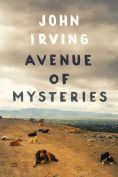 From the cover to the very last page, “Avenue of Mysteries” is a strange tale of two “dump kids” from Oaxaca, Mexico. Juan Diego, 14, and his sister Lupe,13, live on the edge of the constantly burning dump with El Jefe, Senor Riveria, who is not their father. Their mother works at the local Temple of the Society of Jesus during the day and at night is a prostitute.
Juan Diego has learned to read by rescuing burning books from the dump. He translates for his sister whose language is incomprehensible to all except Juan Diego. Lupe is gifted as well. She has the ability to read people’s thoughts.
Add to these two characters an assortment of people who all play an important role in the lives and future of these two children. Brother Pepe, a member of the Society of Jesus, Edward Bonshaw, an Iowan who has come to Oaxaca to train for the priesthood, Flor, a transvestite prostitute, Miriam and Dorothy, who may or may not be mother and daughter, Clark French, a former student of Juan Diego, Gloria, a tightrope walker, and many more.
The settings are also varied. As Irving unfolds his story, the characters travel from New York to Hong Kong to the Philippines, to Iowa,to Oxaca, to Mexico City, from the present back into the past. Each of these places plays an import role in Juan Diego’s life, who will eventually become a best-selling novelist.
It is very difficult to summarize the plot of “Avenue of Mysteries” as it deals with so many themes, themes Irving has explored in many of his other novels. Tragedies, death, belief in God and non-belief in God, love, sacrifices, all of these obsessions haunt the characters in this story.
Punctuated with some very funny episodes, some very absurd, some extremely tragic, this is a novel that is ultimately a story of love and the power of human connections. Other Irving novels have been better received by the critics–“Cider House Rules,” and “The World According to Garp.” They were widely heralded as masterpieces, but “Avenue of Mysteries” is a good story that once again illustrates the power of John Irving’s writing.